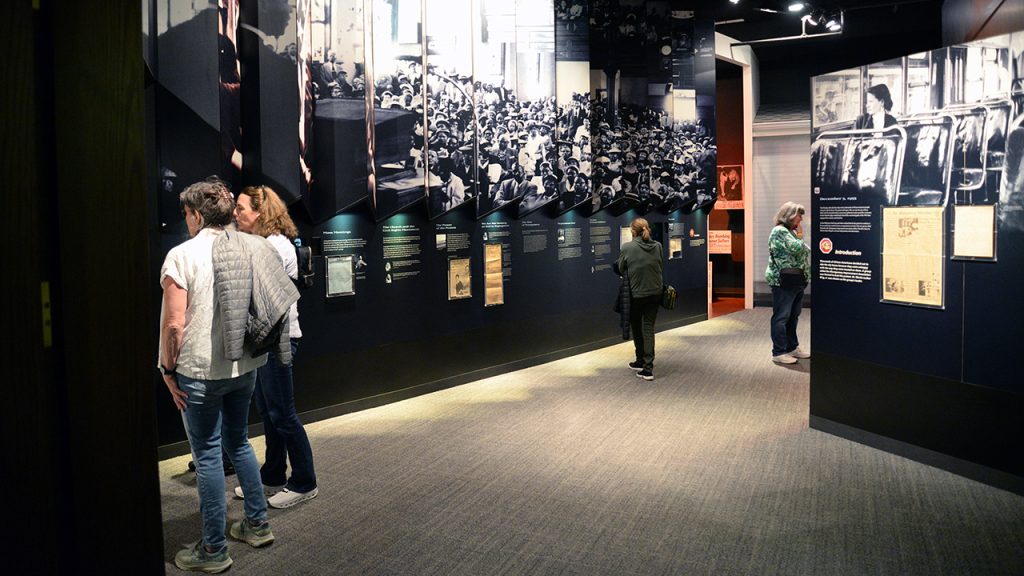
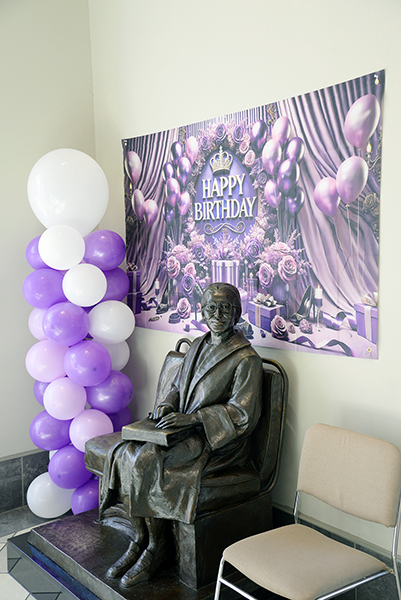
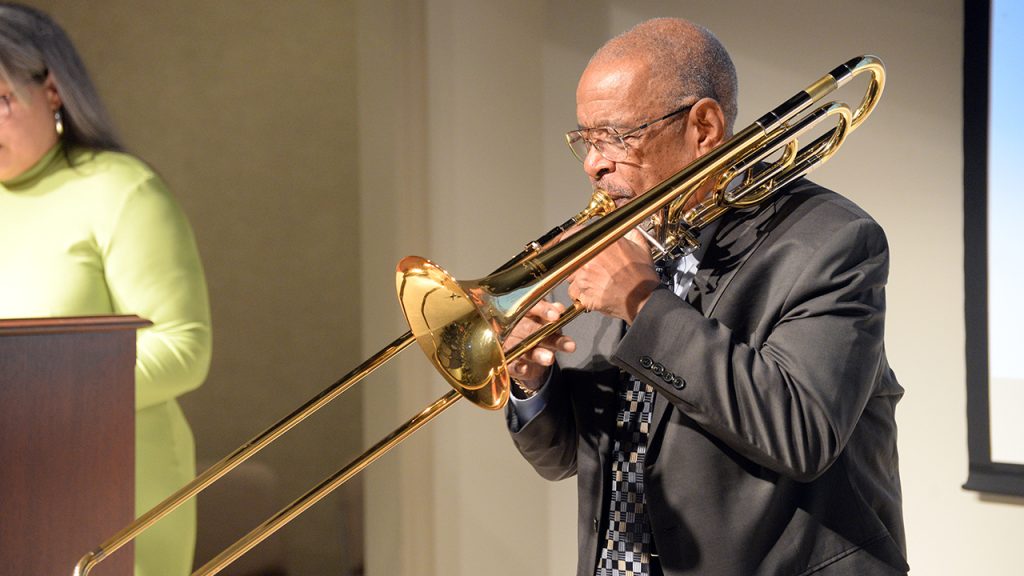
Troy University’s Rosa Parks Museum celebrated Mrs. Parks’ lifelong legacy of advocacy on Saturday with a pair of special programs, free admission to the museum and birthday cupcakes and cookies in recognition of the Civil Rights icon’s 112th birthday, which is Feb. 4.
Donna Beisel, Director of Museum Operations, said that while Mrs. Parks is often remembered for famously refusing to give up her seat on a Montgomery City Bus to a white passenger and her subsequent arrest that led to the Montgomery Bus Boycott, she was an activist throughout her life. That is the message Beisel hoped Saturday’s visitors would take away from their time at the museum.
“Her activism was so much more than just that one stand,” Beisel said. “She was a lifelong member of the NAACP, she was active in women’s and young people’s rights, voting rights, educational rights, low-income housing. She had a wide and deep life of activism. Her legacy is hopefully to inspire all of us that, when we see injustice, we have the courage to take a stand and say, ‘this is not right, and I’m going to do something about it.’”
Opened in 2000, the Rosa Parks Museum is located on the very spot of Mrs. Parks’ Dec. 1, 1955 arrest.
“We are located on the site where she was arrested on the evening of Dec. 1, 1955, so history happened right here,” Beisel said. “It is important to keep that history alive and educate future generations on her life, but also her long life of activism.”
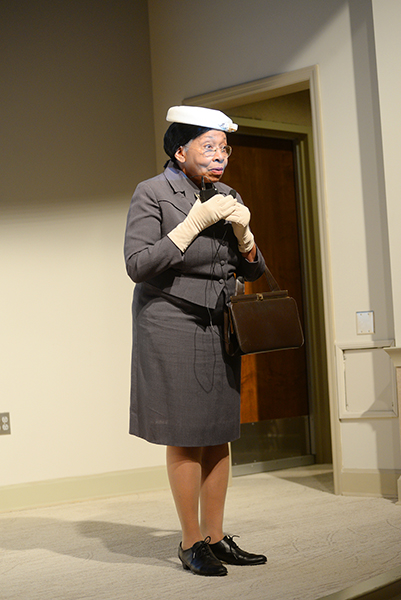
Visitors on Saturday had the opportunity to relive some of that history. During the morning, Ann Clemons portrayed Mrs. Parks in “The Life and Legacy of Rosa Parks,” a program that retraced the history of that day, her arrest and the Montgomery Bus Boycott that followed.
On Saturday afternoon, Sheila McCauley Keys, Mrs. Parks’ niece, presented “The Gathering,” a program intended to share information about her aunt’s life with young people.
“I want our young people to come in and get some information about her and understand how relevant she is for today,” Keys said. “She is as relevant today as she was in 1955. I want them to understand what good work she was doing and that they can pick up the baton and complete her work. She has transitioned on, but they are still here. They need to come in and understand what happened in the past, what is going on now and what needs to happen in the future. That’s what ‘The Gathering’ is all about.”
Keys saw her aunt as a mother figure and a teacher.
“She was more of a mother figure. My mother and father had 13 kids, so she helped to raise the 13 of us when she had time, when she wasn’t traveling,” Keys said. “She did teach us quite a few different things, and she was a mentoring spirit for us. She was a well-rounded human being – someone who had the ability to discern right from wrong and had very good judgement.”
Among those important lessons was being in service to others.
“She did teach us to be our brothers’ keepers, and that we needed to figure out what we needed to do in our own communities,” Keys said. “That’s where you start – in your own space. You start in your home first, then you go out into your community, and that is when the change will come. If you don’t do it that way there will be no economic change, there will be no moral change, there will be no difference made.”
Dec. 1, 2025 will mark the 70th anniversary of Mrs. Parks’ historic arrest, and Keys believes it is as important as ever to continue the lifelong work of her aunt.
“I just wonder if she is looking down on us and saying, ‘What are y’all doing, come on, pick up the pace and do something,’” she said.
In addition to free admission to the museum, visitors were able to step back in time aboard the Montgomery Transit Authority’s 1950s-era bus, the same type of bus Rosa Parks would have boarded on the evening of her arrest.
“Being a woman during that time, she understood the risks of what could happen to her with her act of saying no, but she had the courage to take that stand,” Beisel said. “Seeing the way her strength and her faith gave her that courage, it continues to inspire me to do the same kind of thing.”