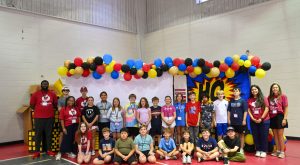
Civic Heroes Week, a summer camp program developed through a partnership between Troy University and the David Matthews Center of Civic Life in Montevallo, Alabama, engages elementary-aged students in learning about government, citizenship and community service.
The program puts fourth through sixth graders on the fictional “Planet Civic,” where participants learn from community leaders, exercise their voice, and help neighbors through games, activities and civic lessons. This approach started six years ago, with the superhero theme developing during the COVID-19 pandemic when organizers moved to virtual programming.
Lauren Cochran, the Coordinator of Civic Engagement at Troy University, explains that the superhero theme reinforces the underlying message that “our local everyday citizens who serve in our community are heroes.” The program’s approach reflects careful consideration of its target audience. As Cochran notes, “One thing that we learned early on in summer programming is that it doesn’t need to feel like school, although we really want to secretly teach them some very important concepts as it relates to civics and community, it has to be fun.”
The camp operates through the Jean O’Connor-Snyder Internship Program, which funds two political science interns from Troy University to design and implement activities. Jayden McQueen, one of the interns, describes the program’s thoughtful structure: “Our curriculum this year is based off of two things. Each day we have a government or American history topic. And then we have a citizen characteristic.” This dual focus ensures participants learn both governmental fundamentals and personal citizenship skills, introducing five-character traits of good citizenship: integrity, humility, respect, responsibility and courage.
Daily programming includes guest speakers representing various service careers including police officers, local business owners, city council members, recycling managers and firefighters. Alondra Jaimes-Pena, the other intern involved in curriculum development, describes creating engaging content for young learners: “It was my first time creating curriculum from the beginning and really having ideas to be able to connect fourth through sixth graders. It was interesting to build activities where they can learn and still be engaged and have fun.”
A central component involves community asset mapping, where participants identify strengths and challenges within their local area. Students work in small teams to develop solutions for addressing community gaps and present their ideas to fellow campers. This approach helps students understand that citizenship extends beyond voting. Cochran emphasizes this point: “They can’t vote yet, but they have shared some really impressive ideas and some really thoughtful concerns about their city. They have mentioned things like Social Security and insurance coverage, and healthcare. So they’re really thinking well beyond their years in issues that are important and issues that matter to them.”
Running from 8 a.m. to 12 p.m. on Troy University’s campus, the camp provides students with hero packs containing materials, daily snacks and opportunities to meet community representatives. The program generates enthusiasm for government and citizenship among young participants while establishing foundations for civic engagement.
Civic Heroes Week shows how experiential learning combined with community interaction and problem-solving activities can teach civic awareness and community pride to our younger generation. The program’s success suggests that early intervention through creative programming can establish foundations for civic participation and community leadership.


