For Joey Jones, Aug. 6, 2010, was a day that changed his life. The 24-year-old Marine was deployed to Afghanistan, working as an Explosive Ordinance Disposal Technician, when he stepped on and initiated an Improvised Explosive Device (IED), resulting in the loss of both of his legs above the knee and severe damage to his right forearm and both wrists.
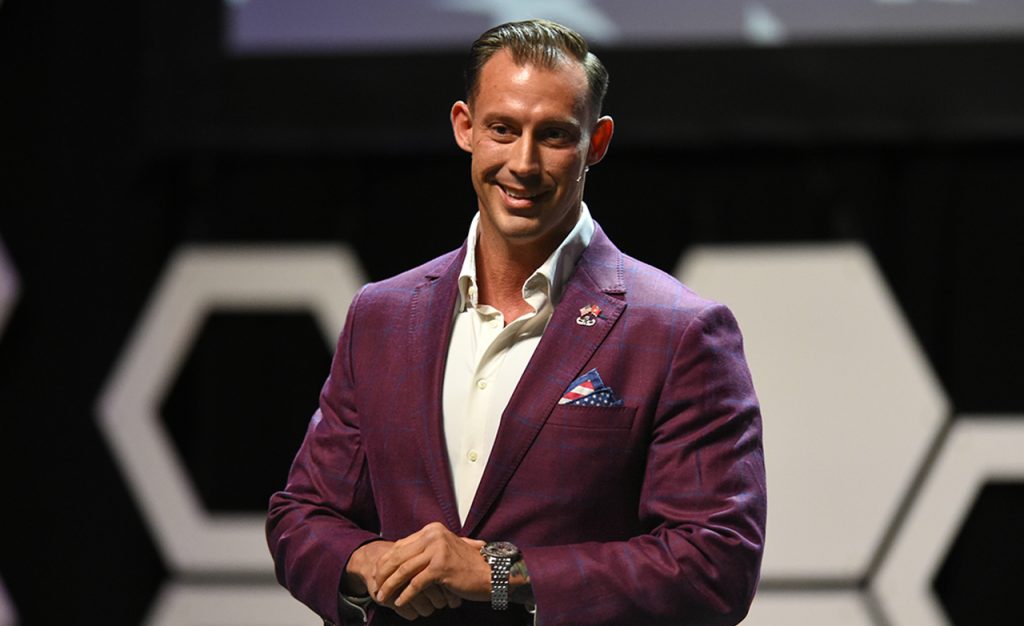
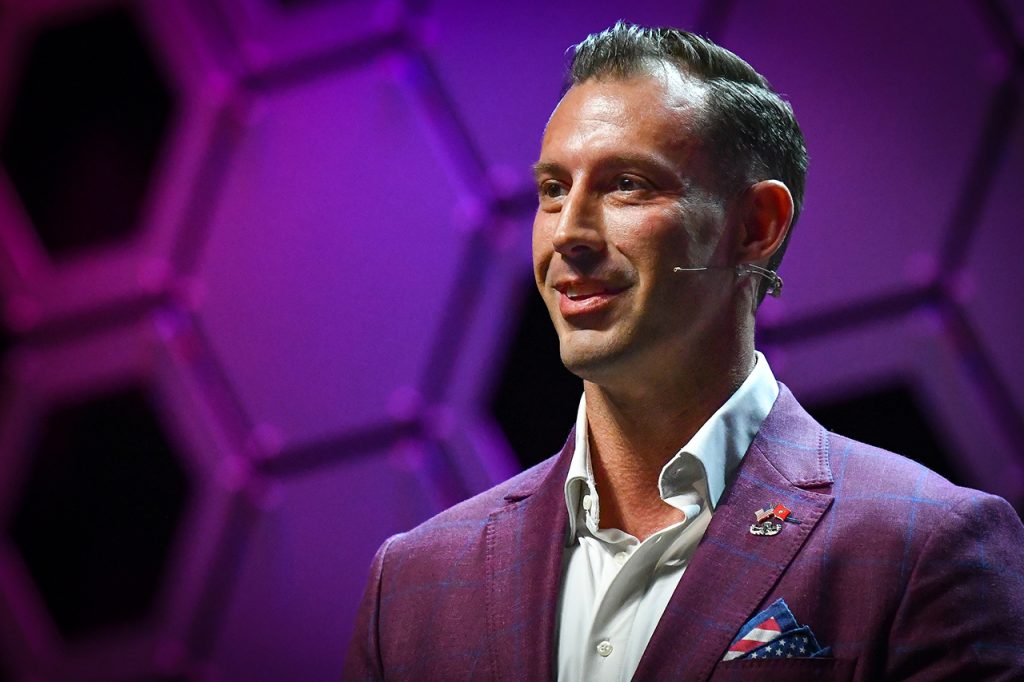
However, it was two days later, Aug. 8, that Jones still describes as the “most definitive day in his life.” Jones, now a regular Fox News contributor and best-selling author, shared his experience and message of overcoming adversity during the annual Helen Keller Lecture at Troy University on Tuesday.
As Jones lay in a hospital bed in Germany with tubes attached to different parts of his body, it was the words of a nurse that set him on the path to recovery. With his attention focused on learning the condition of a fellow Marine – Cpl. Daniel Greer – who was providing security for Jones during the time of the explosion, Jones struggled to speak.
“Where’s Greer?” he asked, finally managing to get the words out.
Greer was on life support in a room down the hall – his family being flown in to say their final goodbyes.
The nurse’s answer to the question was thoughtful and measured, perhaps due to her level of experience or by Divine intervention, Jones said.
“She said ‘don’t worry hon, you’re going to walk again.’ What she did that day was to change the trajectory of my life forever,” he told the audience in the Claudia Crosby Theater on the Troy Campus. “She told me what I needed to hear, when I needed to hear it, even when that wasn’t what I was focused on. She understood that how she responded to that question could dictate how I responded to this adversity for the rest of my life. If she had told me Daniel Greer was dead, I might blame myself fully. The guilt might overwhelm me, and I might never have the motivation to get on prosthetic legs or to even get out of that hospital bed. I may lose all track of what my purpose is because the guilt of losing Daniel and feeling responsible for it might consume me in this most vulnerable moment of my life.”
It was those words that would drive him throughout his recovery.
“For the rest of my recovery, when I thought there is no way I could do this, I would hear that voice saying, ‘Don’t worry hon, you’re going to walk again.’ That woman had faith in me,” Jones said. “That is so important to share with you today because at the age of 24, I was blown up in Afghanistan and lost my legs. I recovered from it. What I haven’t done is survive cancer or dealt with something I was born with. I’m not dealing with an illness now that might still take my life. I haven’t dealt with the adversity that so many people in this world – in this room – right now are dealing with, but for some reason, a lot of you have admiration for me for what I did deal with. This is my opportunity to tell you what you need to hear, when you need to hear it, even though that is probably not what you are focused on.”
For Jones, a sense of responsibility also played a key role in his recovery.
“The fact is that when motivation fell short, the one thing that kept me moving was responsibility,” he said. “When I think about responsibility, I think there are things in this world that people look at me, and only me, to do. What an amazing purpose that is. Responsibility is proof that you are doing things that matter. It is motivation on steroids.”
Everyone faces adversities in life, the Dalton, GA native told the audience. The perspective with which one approaches life’s obstacles is key to the ability to overcome those adversities.
“Perspective is how we deal with adversity. We don’t always win, but we don’t have to be miserable,” Jones said. “Remind yourself of the things you need to hear, when you need to hear them and do that for others as well. Understand that the things that have you stressed out can also be a blessing and an opportunity. Adversity, in all its forms and tragedies, is also an opportunity. These are all things that are much easier said than done, and I fail at them every single day. But I keep going.
“You don’t get blown up in Afghanistan, lose both your legs and smile pretty much every day afterwards without a lot of people that love you and take care of you,” he added. “That’s what happened to me, and I believe that is the experience waiting for everybody in this room. If you don’t have anybody else, you’ve got a legless guy named Joey that believes in you. And, I hope that means something.”
The Helen Keller Lecture series, which began in 1995 as the vision of Dr. and Mrs. Jack Hawkins, Jr., Chancellor and First Lady of Troy University, is held annually to call attention to and raise awareness of the challenges of those with physical limitations, particularly those affecting sensory ability.
This year’s Helen Keller Lecture was organized by the Troy University Chancellor’s Fellows and was sponsored by the Alabama Institute for Deaf and Blind, the Alabama Department of Rehabilitation Services, the Alabama Department of Mental Health, the Helen Keller Foundation, and the Alabama State Department of Education.