Troy University is participating in a collaborative effort to take advantage of the national CHIPS Act aimed at growing the domestic semiconductor manufacturing capacity.
The Phenix City Campus, working with the United Way of the Chattahoochee Valley and its Chips 4 Chips Alliance, is currently analyzing survey responses from a comprehensive analysis of the current housing market in the region, working together with Georgia Tech’s Economic Innovation Institute, the Atlanta-based Center for Economic Development Research and Columbus State University.

“We expect it will take a few months to analyze the data thoroughly,” said Dr. Lane Boyte Chadwick, a professor of economics who is leading TROY’s part of the process, along with a small team of student researchers.
“From there, we’ll be able to identify the key issues affecting the area, which will serve as the basis for our focus groups,” she said. “By integrating both quantitative and qualitative data, we aim to present a comprehensive and accurate picture of the current housing situation in the region.”
Ultimately the goal of the research will provide an analysis of not only affordable housing but will address topics such as commuter patterns, education, public works, taxation, real estate markets, cultural preservation, diversity, economic development patterns and future growth opportunities.

“It will essentially provide communities with a blueprint to lobby and attract business development projects based on its labor force and quality of life,” said Kathy Ninas, Director of the Phenix City Campus’ Office of Creative Economy, who helped spearhead the collaboration with Campus Vice Chancellor Dionne Rosser-Mims and Chadwick.
Signed into law in 2022, the “Creating Helpful Incentives to Produce Semiconductors and Science Act” spurred the Chattahoochee River Valley-based arm of the United Way to establish its own group – the Chattahoochee Hub for Innovation and Production of Semiconductors Alliance.
Chadwick said the collaboration began in late 2023.
“Last fall, we began researching and engaging with the United Way after learning that they had secured a grant to leverage Georgia Tech’s Economic Innovation Institute and its extensive data capabilities. However, the United Way required additional support for survey deployment, dissemination, marketing, and analysis on the ground,” she said.
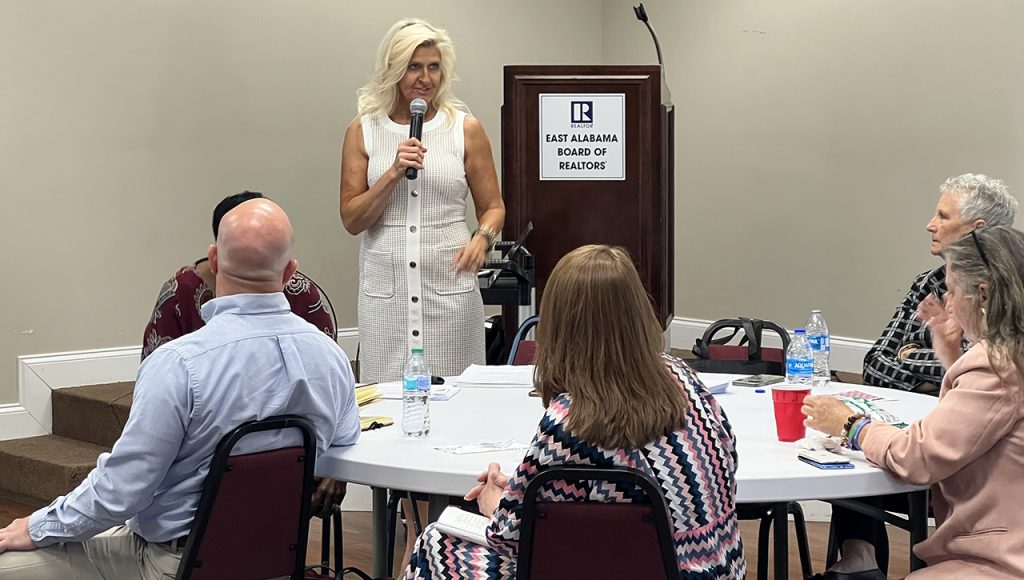
She, Rosser-Mims and Ninas began targeting organizations in the region such as the East Alabama Chamber of Commerce and the East Alabama Board of Realtors to kick off the initiative. Rosser-Mims is the 2024-2025 United Way Campaign Chair.
“Troy University can make a societal impact on our local community by partnering with Georgia Tech and creating an exemplary product that other areas can easily emulate, beginning to find solutions to their own problems,” Rosser-Mims said.