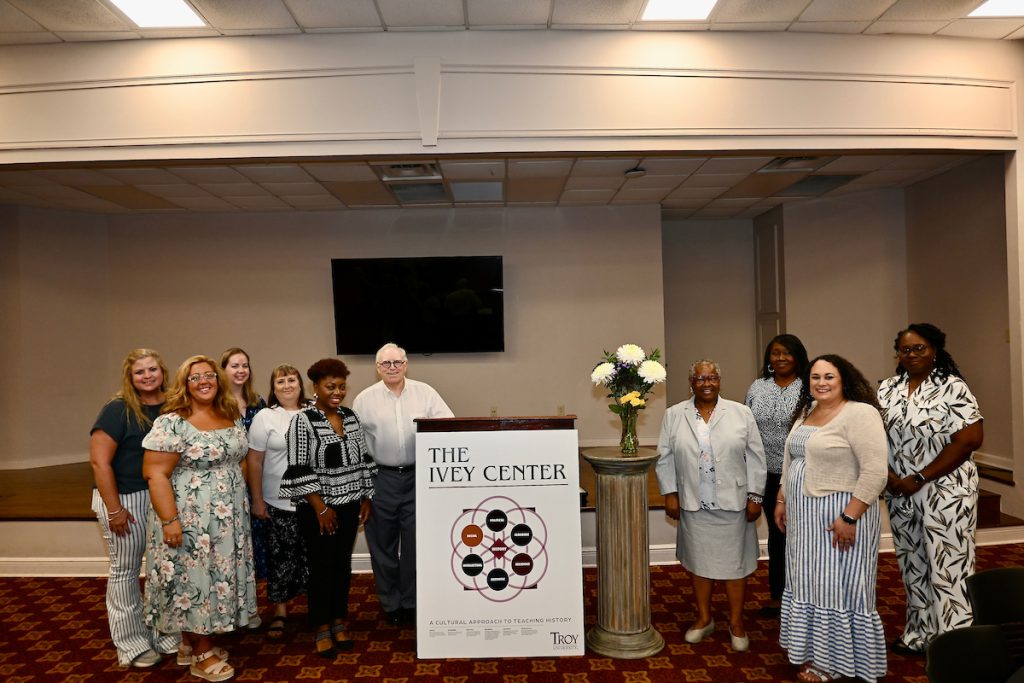
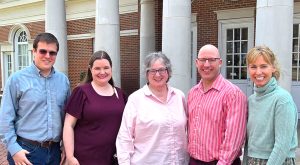
Teachers from across Alabama gathered at Troy University this week for the inaugural workshop hosted by the newly established Ivey Center for the Cultural Approach to History. The five-day intensive training marked the first time this innovative teaching methodology has been offered at Troy University, bringing together educators eager to transform how students learn history.
The Cultural Approach, developed over 30 years ago by Auburn University Professor Emeritus Oliver Turner Ivey, replaces traditional rote memorization with six interconnected areas of study: political, religious, aesthetic, intellectual, social and economic factors that shape historical events. Teachers learned to use these “six faces of history” to help students understand the complete picture of historical periods rather than isolated facts.
“We want our children to know who we are, who they are, and we don’t want them just to focus on memorization,” explained Dr. Linda Felton-Smith, director of the Ivey Center. “We want them to actually know the ‘why’ behind certain things.”
Throughout the week, teachers discovered practical strategies for bringing history to life in their classrooms. They explored how to integrate reading standards with social studies content, ensuring students master both literacy skills and historical understanding simultaneously. Workshop participants worked extensively with Alabama and United States maps, preparing for new course requirements that combine national and state history instruction in third grade.
The training emphasized moving beyond textbook-driven lessons to interactive approaches that engage students as active participants in historical narratives. Teachers learned to help students see connections between past events and present circumstances, making history relevant to their lives.

Sara Beth Gunn, one of the participating teachers, said the workshop equipped her with skills that will transform the way she teaches history in the classroom. “I’ve learned how to teach social studies in an interactive way, moving beyond just reading the text and answering questions. Now I can make history alive for students by pulling from different aspects of history so they understand it’s a story over time that they can place themselves in.”
Each participant is developing a unit plan to implement in their classrooms this fall, with follow-up visits planned to observe lessons in action. The teachers will receive continuing education credits and certificates at the workshop’s conclusion.
The Ivey Center, housed in John Robert Lewis Hall and funded by the Caroline Lawson Ivey Memorial Foundation, represents a partnership between state government, private philanthropy and higher education. Plans are already underway for next year’s workshop as the center expands its mission to train both pre-service and in-service teachers across Alabama.