If you’ve attended a game in Veterans Memorial Stadium you have heard several well-known phrases while the Sound of the South stands at attention on the field.
“With mighty warriors clad in strongest armor, and well prepared to receive the lot dealt by fate, the contest is at hand. And the commander’s spirit, raging for revenge shall in a monarch’s voice, cry Havoc! And let slip the dogs of war.”
Of course, you can’t forget this classic phrase: “So sit back and relax. Here’s the Sound of the South!”
The man behind the microphone with the commanding and familiar voice is Paul McNeeley, who is celebrating 31 years as the voice of the Sound of the South. McNeeley started at then Troy State University in January of 1977. He has always been involved with music in some way throughout his life, and he came to TROY to be part of the Sound of the South.
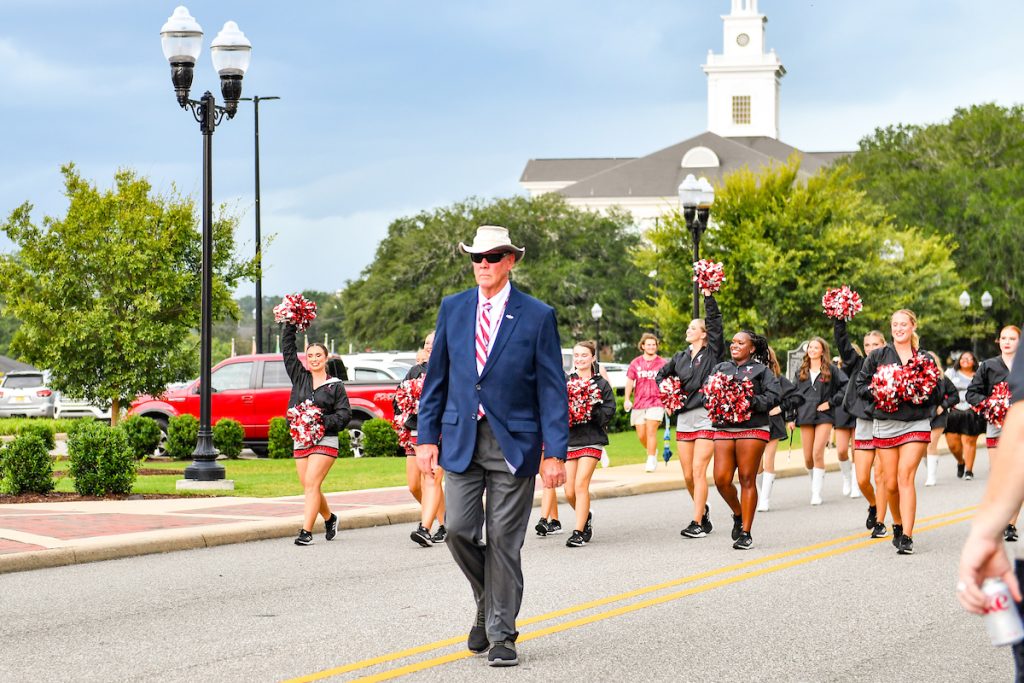
“My original goal was to always become a band director,” he said. “Not long after I got to Troy, I was able to get a job at WTBF. Doc Kirby was nice enough to take a chance on me. He is the greatest teacher for someone who wants to become a public speaker.”
David “Doc” Kirby, a lecturer in the Hall School of Journalism and Communication, said that he has always admired McNeeley for being a dependable and talented individual.
“He was not only a talented person, but also very reliable and that’s a rare trait,” he said. “I think that’s why he’s done so well with the interesting career that he’s had. He is dependable, talented and amiable when you ask him to do stuff.”
Kirby, a fellow SOTS alumnus, also explained that McNeeley’s experience with the band makes him understand what the band’s needs are during performances.
“He had been a working member of the Sound of the South before he was the announcer, so he knows what it’s like to be on the field,” he said. “He knows the different approaches and understands that when people come running out, maybe they will need a second to catch their breath before they hit a big fat note.”
McNeeley has also worked with the likes of John McVay of Southeastern Public Radio and TSU Television’s James Clower.
“All these people that I had the opportunity to learn from made different impacts on what I became. Any success that I had with being able to do this effectively is because of them, I’ve been very fortunate.”
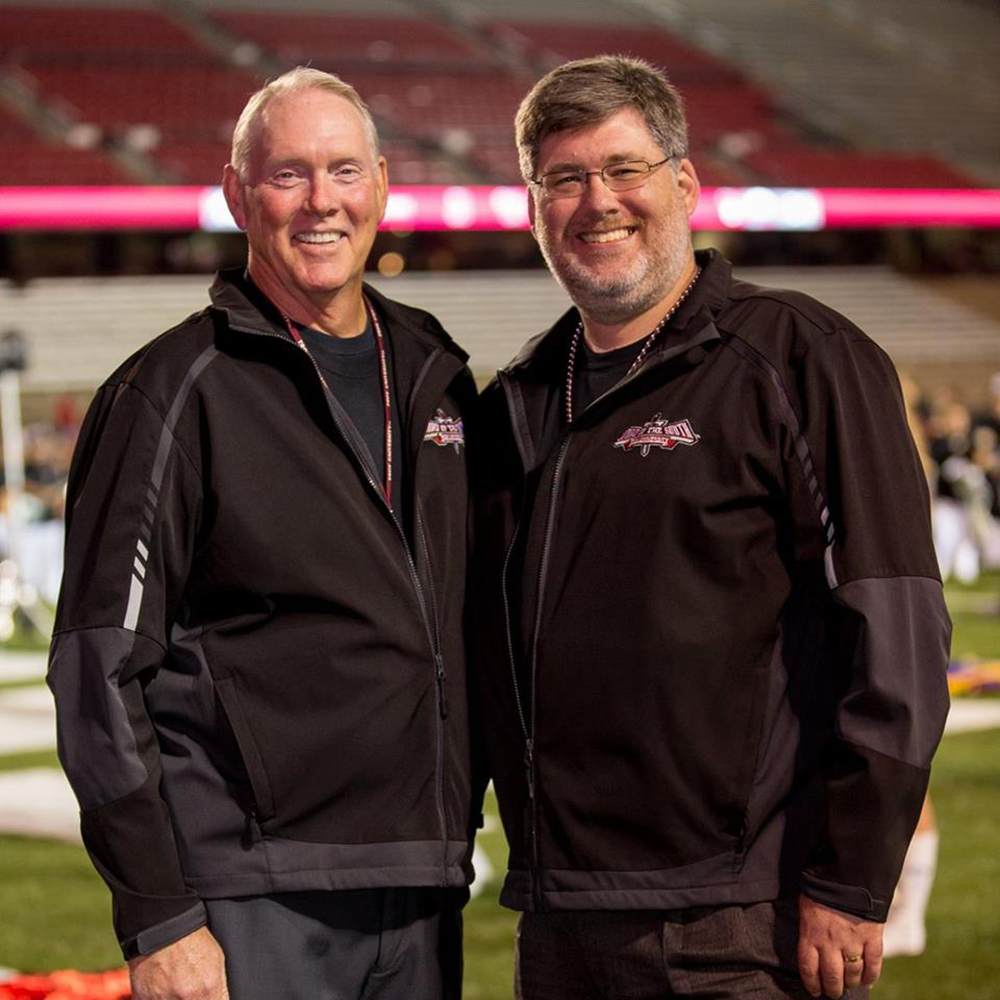
On game days, you will most likely find McNeeley next to the Director of Bands, Mark Walker. The pair have shared a sense of brotherhood for over two decades that makes for a great team.
“Paul has got an excellent sense of timing and craft,” Walker said. “When we sit down to put together scripts, Paul does all the work, not just the lion’s share. I tell him my ideas and I give him a rough sketch of what I’d like to see, and he knows what to do,”
Walker also says that a big part of the band’s success comes from McNeeley’s deep care for the band and its students. An example of this is that every year during band camp, McNeeley takes a week off from work to come to TROY to work with the band and that year’s show.
“All these years he’s always worked with the drum majors on timing, cues, and showmanship,” he said. “Paul has a terrific sense of showmanship that I think he inherited from Phil Kelly and the years that he worked with him. All that translates into our shows.”
“I love being around the band,” McNeeley said. “I have always loved the band, and it gives me the opportunity to be part of helping put on a show, to help recruit students not only to come be in the band, but also to come to the university. I’ve always enjoyed the students who are in the band because they are cut from a different bolt of cloth. Many of them are student leaders that came from their high school programs and are the cream of the crop. I don’t get to meet all of them, and I feel like I’m lucky if I learn five or six or eight of their names a year. But they’re wonderful students and I just I love the opportunity to see how the show develops each year and see how well they play.”
McNeeley added that he also enjoys being around around Walker, whom he calls his closest friend, and that the football season gives them the built-in opportunity to spend the weekends together.
Dr. Phil Kelley, retired Director of Musical Theater and Opera Workshop, served as the voice of the Sound of the South until 1995. When former band director Dr. John M. Long asked him to become the announcer, they created the timeless introduction for the Sound of the South.
“He was able to continue that tradition with a much better, deeper voice than me,” Kelley said. “I’m just so proud of him in so many ways.”
McNeeley graduated from TROY in August of 1994 with dramatic arts major and a concentration in musical theater production. He also served in the Army National Guard for 30 years.
When McNeeley’s 20-year anniversary with the Sound of the South approached, his name and contributions to TROY found a permanent spot on campus.
“I was very flattered and appreciative that when I hit the 20-year mark, my wonderful wife Cheley got with Mark, and they came up with a nice little celebration. I was lucky enough to receive a marker on the Sound of the South walkway that leads to the fountain.”
Throughout the years, Cheley McNeeley has been a supportive figure in Paul’s career and commitment to the Sound of the South.
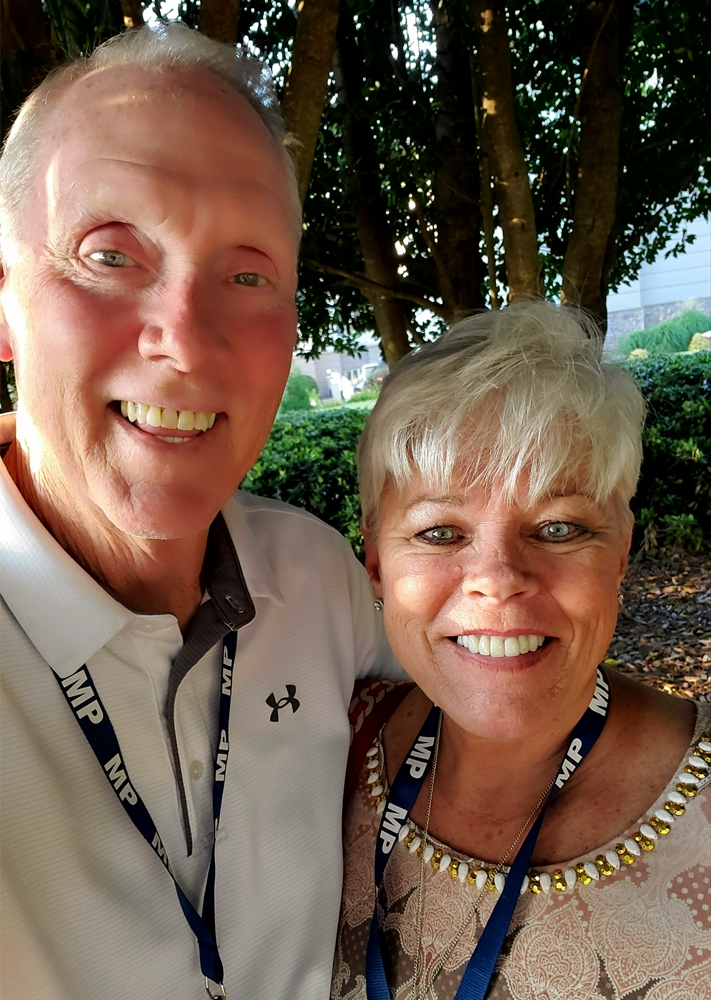
“Even though it can sometimes get in the way of plans that we would like to have, she’s very understanding,” McNeeley said. “She knows that it’s something that I love very, very much.”
“In 31 years, I have missed only two marching band performances. It’s something that I’m able to put it on my calendar early enough, and the people that I work with at Okaloosa County Schools understand what I do; they are very helpful with my schedule.”
McNeeley’s favorite performance every year is during the Military Appreciation Game, when the veterans are saluted and recognized for serving the country.
“That probably is one of the greatest feelings and the greatest days that we have because we’re able to bring recognition to all the people who served this country. They genuinely appreciate that, and we see the genuine appreciation that people have for that.”
McNeeley’s voice has not only made an impact during gamedays at TROY, but also in his everyday life.
“I have blown the speakers in three or four stadiums that we’ve done exhibitions in,” he said.
“One time I went to lunch at McDonald’s in Daleville and I went through the drive thru and ordered food. When I got to the window the woman asked me “Are you the guy that announces for the Sound of the South?’ I’ve been very flattered when people know that.”
McNeeley is also very proud to lend his voice as the announcer for the Troy University Symphony Band.
“Many symphony bands now don’t use an announcer very much anymore. They just they print a program and hand it out and you’re supposed to keep up. Fortunately for me, Mark likes to have an announcer give program notes between selections during a symphony band concert. It does two things, it helps the band rest for a minute between one number and the next, and it also helps the band and the audience shift gears from one style or one type of music to another. The way I see my job with the symphony band, is to provide a program note that gives the listener in the audience the ability to close their eyes and see the description of what the music is about, and basically create their own movie.”

McNeeley’s legacy has made an impression on several generations of musicians in the Sound of the South.
“I’ve had kids come up to me over the years and tell me that their mom or dad, or both, were in the Sound of the South and that they say ‘hello!’” he said. “It’s always been very flattering that their parents were in the band and now they’re in the band and they come seek me out and it’s just so nice to meet them.”
According to McNeeley, the legacy of the Sound of the South doesn’t just come from those in charge, but from the students that choose to march with the band while attending TROY.
“The band continues its tradition of greatness, mostly because it starts with Dr. Walker. He tells the incoming members every year during the first part of band camp that ‘We stand on the shoulders of giants that came before us. You who are in the band now need to understand that maybe not this week, and maybe not this year, but many years down the road, you are the giant that they will be standing on the shoulders of. You need to continue to honor the giants that came before you.’ So, I think that helps the band understand why they’re here.”