This is the last post in our series on train wreck photographs in the Tom Solomon Collection.
Railroading in the early 20th century could be dangerous, and train wrecks could be horrendous.
This was true for Engineer Richard G. (Dick) Morgan and his Fireman W. Brown Hunter who were driving Atlantic Coast Line passenger train No. 57 northbound from Dothan at 6:20 am, Sunday, June 24, 1917. Rounding a curve a mile north of Dillard in Dale County (about 5 miles north of Ozark), the rail beneath them spread out of alignment and plunged their train off the embankment.
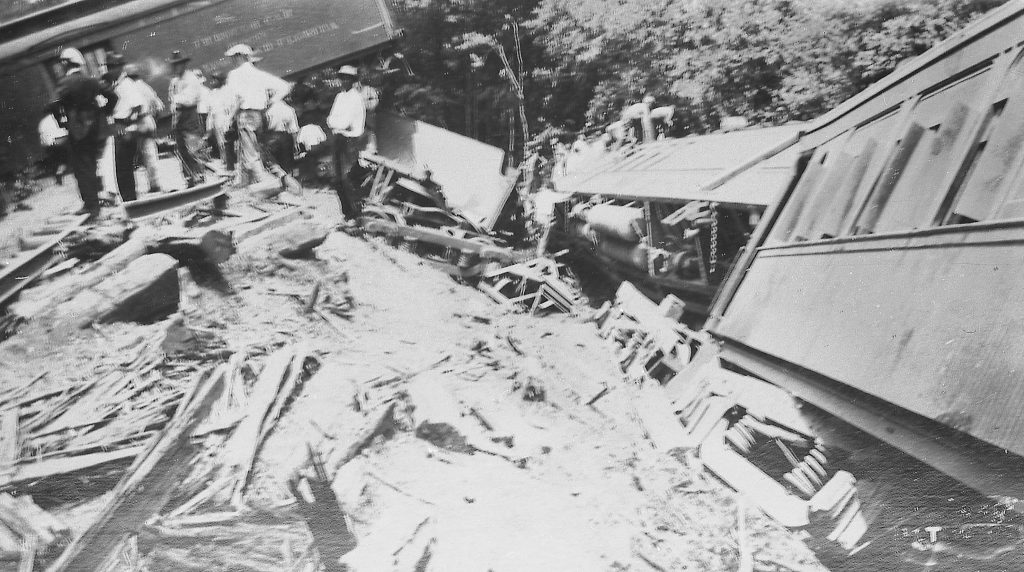
The engine pinned and suffocated Dick Morgan but only trapped Brown Hunter, who was alert and talking until a steam pipe burst and ended his life. Morgan was 53 years old and, as a 30-year veteran of the line, was about to retire. The Montgomery Advertiser called him “one of the pioneer railroad men of Montgomery” who was “generally beloved.” It noted he had begun work with the Alabama Midland before it sold to the Plant System in 1890 then to the Atlantic Coast Line in 1902. Morgan was survived by his wife and their six children. (“Death on the Rails Claims Two Victims on Sunday Morning,” Montgomery Advertiser, June 25, 1917.)
Hunter, a 29-year old who had worked for the ACL for a decade, had been promoted to “extra-engineer” but because of war-time cutbacks in personnel was working as a fireman. He was survived by his wife, his mother, and his grandmother. Both lived in Montgomery and had friends down the line all the way to Dothan.
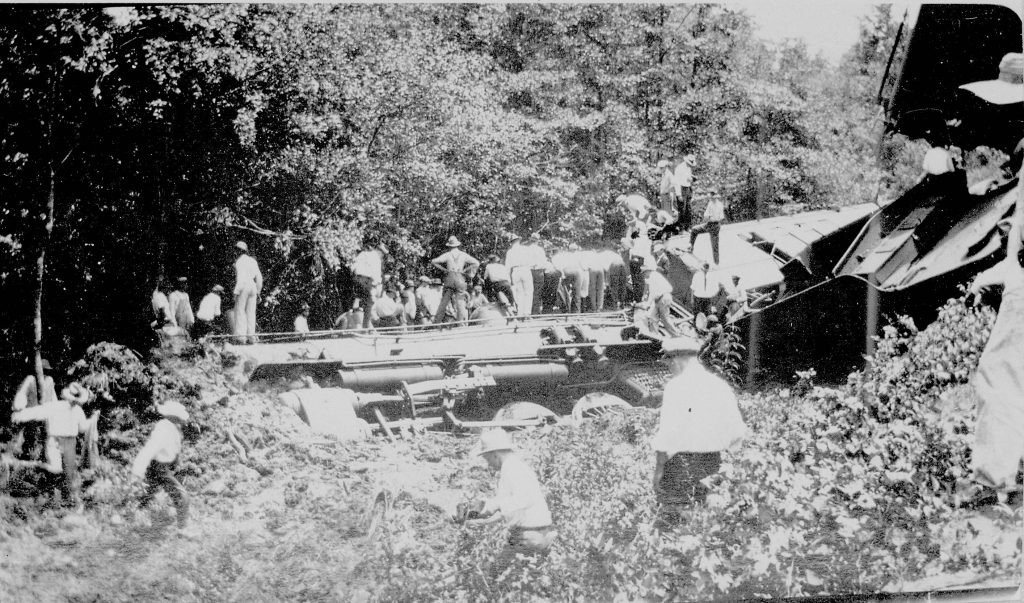
The accident injured three other trainmen but Ozark doctors treated them at the scene. Newspapers reported that passengers in the Pullman sleeping cars were undisturbed.
The Dothan Home Journal further reported that “a large number of automobiles . . . rushed to the scene . . . and many thronged the roads during the day.” (“Believe Rail Brake Caused Fatal Wreck,” Dothan Home Journal, June 28, 1917.)
Judging from the crowds of onlookers climbing on the engine in these photos, it appears the photographer captured these images on the day of the wreck.

The passengers and crew arrived in Montgomery after 4 pm that Sunday. Hunter was buried on Monday, and Morgan on Tuesday. The ACL repaired the line by late Monday afternoon.
For years thereafter, the site of the accident was called the Dick Morgan Curve.
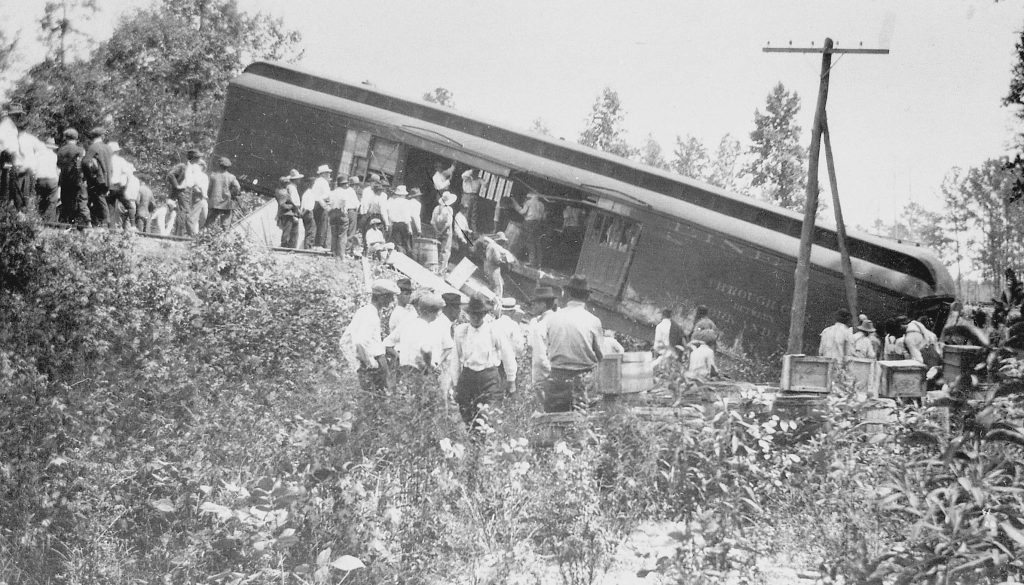
The photographer is unknown. The photographs are in the Tom Solomon Photograph Collection, RG 146, at the Wiregrass Archives, available through this link: https://www.troy.edu/about-us/dothan-campus/wiregrass-archives/inventories/146.html