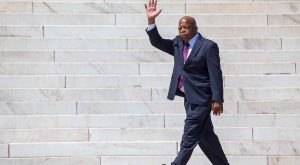
John R. Lewis – recently deceased Congressman from Atlanta, Freedom Rider, leader of SNCC, speaker at the 1963 March on Washington, antagonist-then-ally of Martin Luther King, Jr., leader of the 1965 Bloody Sunday march in Selma – was born near Dunn’s Chapel AME Church a few miles east of Troy in 1940. He was educated in Pike County’s segregated school system which he discusses in his 1996 autobiography, Walking with the Wind: A Memoir of the Movement.

Lewis’s autobiography provides little more than memories of his early education because he wanted to cover the more public aspects of his life that occurred after he left Alabama. But other records fill out the story.
The Wiregrass Archives holds two collections that speak to Lewis’s early schooling. The first (inaccessible to most researchers because of privacy laws) is the Pike County school census cards (1930-c. 1980) and Alabama School Registers (grade books and attendance records from individual classes). State law mandates that these records be retained permanently.
The second collection is publicly available: the Alabama Department of Education School System Surveys (copies courtesy of the Alabama Department of Archives and History, guide to the Wiregrass Archives collection here – https://www.troy.edu/about-us/dothan-campus/wiregrass-archives/inventories/129.html).
Every decade or so after 1930, state officials conducted educational surveys of Pike (and other) County. The reports they issued cover school financing, buildings, proposed consolidation, and even have maps that note school locations, coverage areas, and where students lived.
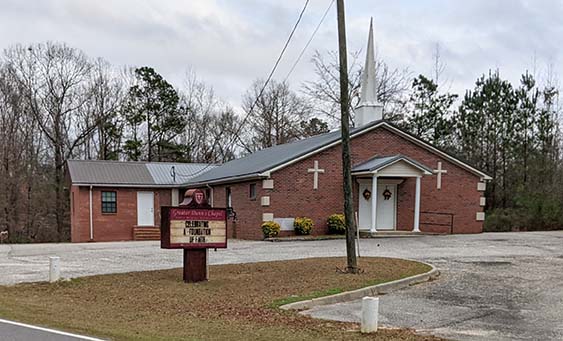
John Lewis – he went by his middle name Robert for a few years – began first grade in 1946 at Dunn’s Chapel School about a quarter mile from his family home in the whitewashed wooden building with a green-painted roof and badly repaired steps. He writes that his mother and the generation before her had attended the two room school with grades 1-3 in one room and grades 4-6 in the other. Five years before he entered Dunn’s Chapel School, it was slated to be abandoned when transportation to a consolidated school became available, but it closed only after it burned down in the mid-1950s.
Lewis recalled that students fetched water from a nearby farmhouse and they each had a drinking cup on a shelf above the water pail. His classroom had a potbellied stove, a large blackboard, a teacher’s desk, and a homemade Alabama state flag.
The school bought other furnishings and materials when it had funds, often generated by carnivals and picnics. Lewis wrote that his favorite carnival game was “Fireball” in which baseball-sized wad of cloth was soaked in kerosene, tied to a lanyard, lit, then flung into the night sky like a small fireworks display. The cost was five for a dollar.
Lewis’s teacher in 1950-51 was Ms. Althea Williams – who he remembered in his memoirs. That year she taught five 4th graders, nine 5th graders, and nine 6th graders reading, math, health, spelling, English, writing, geography, and science from books discarded from white schools.
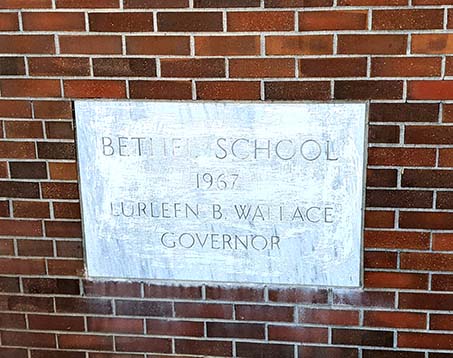

For grades 7-8, Lewis traveled eight miles to Banks Junior High, located on state highway 93 just south of the Banks town center. Few records exist concerning this school but he recalled it as a cluster of cinderblock buildings with outdoor privies. All the teachers were women with Mrs. Horton as principal. In 1967, Pike County and the state used Equalization Funds to build Bethel School on the site. Bethel School later served as Banks Elementary and currently (March 2025) houses the Sprout Learning Center for kids aged 0-5.
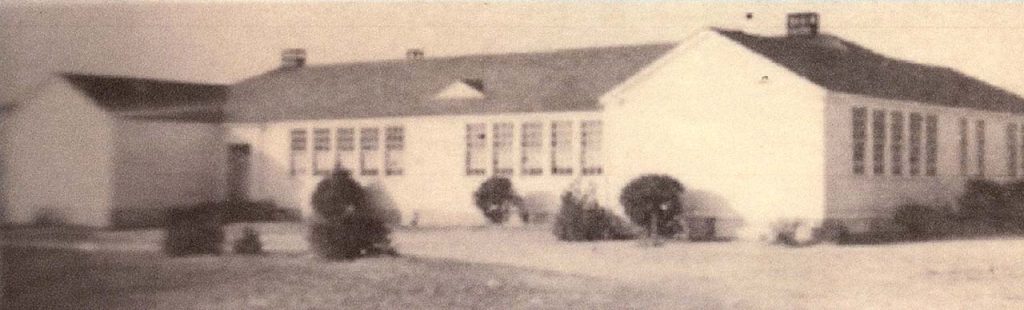
Across Alabama and regardless of race, school persistence rates were low, meaning that few students who attended first grade even entered high school, much less completed it. But John Lewis did. The 1954 school census shows him at Pike County Training School (PCTS). The original PCTS building of nine classrooms opened in 1940, and in May 1955 ten new classrooms and an agriculture building were added.
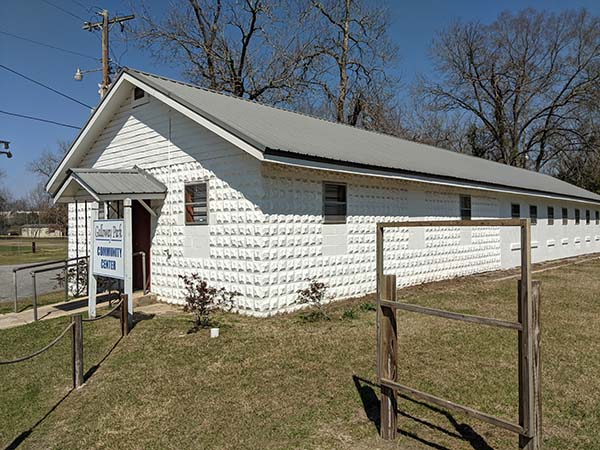
The December-May construction project might explain why Lewis transferred across Pike County to Goshen “Colored” High School. He appears on the January-May 1955 roll of Ms. Ethel Webster’s tenth grade class but returned to PCTS for his final two years. Although PCTS was rebuilt in 1962, it was abandoned when Alabama finally integrated its schools after the Lee v. Macon decision of 1967. The site is now Galloway Park, with the agriculture building serving as a community center.
Lewis remembered PCTS concentrating on vocational agriculture though he studied History, English Lit, Biology, Algebra, and, interestingly enough, Home Economics from teachers who all graduated from Alabama State in Montgomery. Students appear to have made the most of this academic background. Of the 37 members of his 1957 graduating class, Lewis claims that ten sent to college. Lewis enrolled in Nashville’s American Baptist Theological Seminary then at Fisk University.
He applied to Troy State College, knowing he would not be accepted. He approached Martin Luther King, Jr. and attorney Fred Gray about suing Troy, but decided against it after a realistic discussion about a lawsuit’s potential effects on his family.
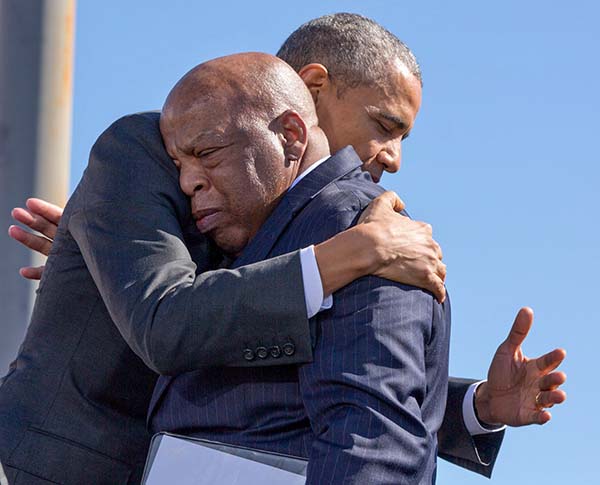
Lewis’s high school years overlapped with the rise of the modern Civil Rights Movement. Although he had long wanted to be a preacher and did, indeed, deliver sermons at church, the Brown v. Board decision, the Montgomery Bus Boycott, and particularly the murder of Emmett Till set Lewis on the path of activism for which he is rightly remembered.
For further reading:
John Lewis with Michael D’Orso, Walking with the Wind: A Memoir of the Movement (Simon & Schuster Paperbacks, 1998).
Fred Gray, Bus Ride to Justice (New South Books, 1995).


