TROY, Ala. (TROJANVISION) — A rise in black bear sightings in Pike County have been seen on social media leading to the question: are black bars on the rise in Alabama?
Black bears may occasionally be spotted around the Troy area, but that does not mean they have established a permanent population nearby.
Dr. Alvin Diamond, a biology and environmental science professor at Troy University, said bears seen around Troy are most likely traveling between other areas.
“We frequently have bears that move through the area, but we don’t have resident bears,” Diamond said. “They’re just passing through.”
Alabama has two primary black bear populations. One is located around the Mobile-Tensaw Delta in south Alabama and extends into the Florida Panhandle. The other is found in northeast Alabama and stretches toward the Smoky Mountains and north Georgia.
Female bears generally occupy smaller territories than males. When young female bears leave their mothers, they often settle nearby, while young males travel farther in search of territory.
TOP STORIES: Upcoming roadwork aims to make problematic intersection safer
“When a bear has young, when those reach a certain age, the females usually will establish a territory adjacent to the mother’s territory, and it will often include a part of her territory,” Diamond said. “Males kind of get kicked out.”
This movement can bring bears into areas without established populations. Diamond said residents who photograph a bear or capture one on a game camera can report the encounter through Alabama’s black bear sighting website.
“The number of sightings and the places within the state where the sightings have occurred has been increasing as these populations get larger,” Diamond said.
Although a bear sighting may frighten some residents, Diamond said Alabama’s black bears are shy and generally try to avoid people. Bears may enter yards when residents leave garbage, pet food or other easy food sources outside. They may also enter chicken coops for chickens and eggs.

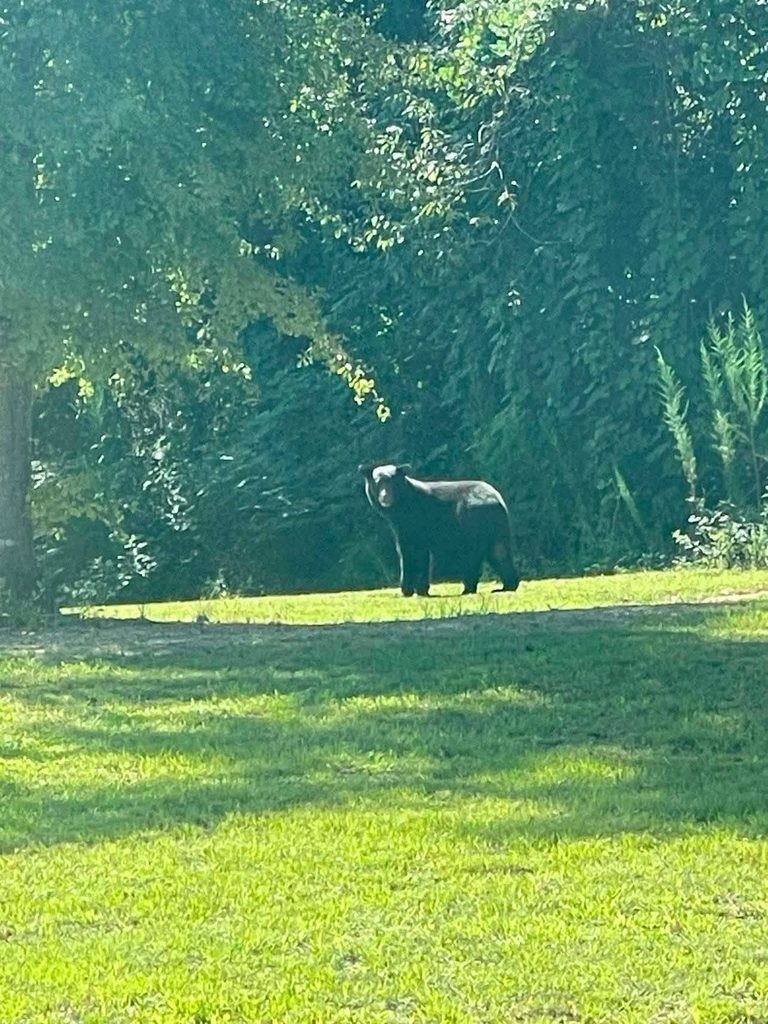
“They’re not interested in eating you,” Diamond said. “Unless you threaten them, they’re going to try to get away from you.”
Black bears eat foods ranging from blackberries and persimmons to insects, snakes and small mammals. Their broad diet allows them to help control animal populations and carry plant seeds into new areas.
“They help to disperse the seeds of the plants they eat,” Diamond said. “When their meal passes through their body, the seeds are deposited in a different area, so they help spread plants around.”
Diamond said bears also represent the importance of preserving wild spaces. Protecting land through state parks, national forests and other conservation areas gives bears and other wildlife places to survive.
“A bear’s not something you see every day,” Diamond said. “When you see a bear, it’s really a special feeling. And it’s important that we still have those sorts of places where you can have those types of experiences.”
Residents can also protect bears by remaining alert while driving, especially on rural roads at night. Diamond said vehicle collisions are among the largest causes of death for bears and other wildlife.
“Just be mindful, slow down, make sure that you’re not going too fast and can’t stop,” Diamond said. “It’ll be a bad day for you and the bear.”
You can report black bear sightings via the Alabama Wildlife Federation’s website.


2 thoughts on “Alabama black bear sightings increase as populations grow”
Comments are closed.