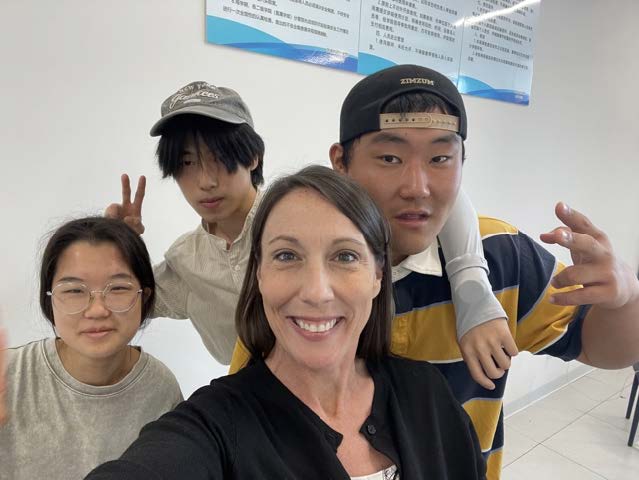
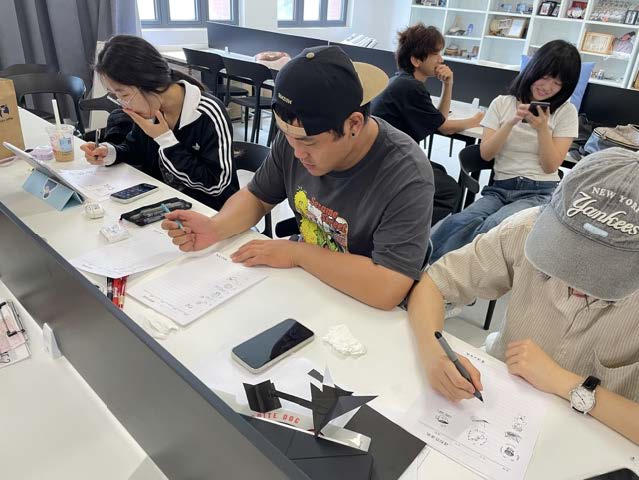
This summer, the Department of Art & Design sent two of its own to China to continue building a longstanding relationship in Changzhou and Nanjing. Professor and Chair Greg Skaggs and Instructor Audry Dunne visited various campuses and taught prospective students.
Skaggs witnessed students transform through engaging with masters of traditional Chinese painting, exploring ancient temples and participating in conversations about digital preservation of cultural artifacts.
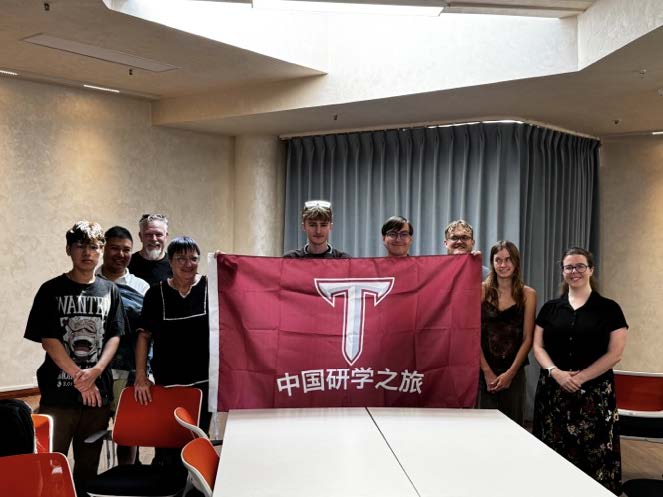
“In the studios where generations of artists have worked, they’re discovering new ways to blend their own voices with global perspectives, exactly what an international education in art and design should be,” said Skaggs. “Beyond the workshops, exhibitions, and symposium sessions, one of the greatest outcomes of this journey has been the genuine friendships formed with faculty and students at the institutions we visited. We’ve created lifelong connections rooted in mutual respect and creative curiosity. It is our sincere hope to sustain these relationships through continued conversations, joint exhibitions, and a shared visual dialogue that bridges our two cultural perspectives.”
Dunne, who taught graphic design students at the Changzhou Institute of Technology, said the experience was one of the most rewarding of her career.
“During a two-week program, I worked closely with a total of eight undergraduate graphic design students. The class focused on projects involving typography, branding, visual hierarchy, color theory, and design principles,” said Dunne. “One of the most interesting aspects of teaching in China was seeing how differently students approached visual communication. The students were creative, hardworking, and technically skilled, but many of the concepts from Western design education such as hierarchy, readability, typography, and the strategic use of white space were new to them. These differences led to thoughtful conversations about how culture influences the way we create and interpret design. The experience also reinforced my belief that design is deeply connected to culture. Working with Chinese students challenged me to examine my own assumptions about effective design and helped me become a more thoughtful educator. Overall, the students were eager to learn, open to new ideas, and enthusiastic about exploring different approaches to design and looking forward to studying at Troy University. The cultural exchange provided valuable insights that will continue to influence my teaching and research.”