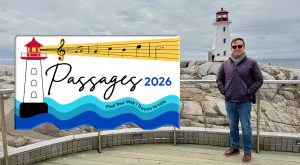
Dr. Scott Sexton, Assistant Professor of Music Education and Assistant Director Troy University’s John M. Long School of Music, presented at the Carl Orff Canada National Conference held on April 23 -26 in Halifax, Nova Scotia. The conference is held every two years in various cities around Canada and is attended by music teachers from all over Canada and a few special guests from the United States and Europe.
Sexton’s presentation, “Passages through History: An Orff Approach to Teaching About the R.M.S. Titanic,” aligned with this year’s conference theme of “Passages.”
“A colleague knew about some music lessons I had created about the ship Titanic and suggested that I apply to present at this conference,” Sexton said. “Halifax is an important part of the Titanic’s history, so it was fascinating to present on location in that city. For the presentation, I gave a teaching demonstration for Canadian music teachers about Orff-inspired music activities about the Titanic. It was such a neat opportunity to work with my Canadian colleagues and hear about Music Education, particularly Orff, in their country.”
Orff-Schulwerk is an active, child-centered approach to music education developed by Carl Orff that combines music, movement, speech and drama. Based on the idea that music is best learned through play, it uses song, rhythm games and instruments (like xylophones) to teach concepts, allowing children to create and express themselves rather than just passively learning.
Sexton has integrated this philosophy into his music teaching for over 15 years, first as a K-12 music teacher, and now as a college professor who teaches future music educators.
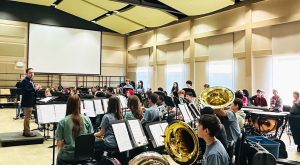
“Many of our Music Education majors at TROY come to study here with the idea that they can only become band or choir directors at a high school,” Sexton said. “Music education philosophies such as the Orff-Schulwerk approach allow our students to explore music teaching possibilities across all grade levels. Of particular importance is the ability to bring in cross-disciplinary opportunities to music teaching. I taught my Titanic Orff music materials to one of my Music Education courses so that my students could see an example of how one might integrate history into a music lesson.”
In addition to attending the conference, Sexton also explored some of the important Titanic-related sites in Halifax, such as the Maritime Museum of the Atlantic and the Fairview Lawn Cemetery, the final resting place for over 100 Titanic victims.
To learn more about TROY’s Music Education programs, please email music@troy.edu.