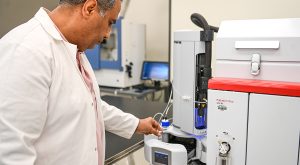
During the spring semester, a groundbreaking undergraduate research project set to reshape how clinicians think about enteral feeding, specifically, how the angle of feeding tubes affects flow and safety when administering blended food diets.
Led by Dr. Teresea Johnson and Dr. Amy Spurlock, along with hands-on collaboration from Shannon Walker and a team of nutrition undergraduates, the project sought to evaluate the performance of straight versus right-angle feeding tubes using various types of formula and blended food.
This research responds to recently set guidelines recommending straight feeding tubes for blended diets due to the assumed risks of clogging. However, the clinical reality often diverges.
In a recent practitioner survey conducted before the study began, it was revealed that many families and healthcare providers favor right-angle tubes for pediatric patients. These tubes tend to be more comfortable, especially under clothing, and easier to secure on active children.
“Our goal was to put real-world practice to the test,” said Dr. Teresea Johnson, Program Coordinator for Bachelor of Science in Nutrition. “If we’re telling parents and practitioners that a straight tube is the only safe way to deliver blended nutrition, but they’re routinely using right-angle tubes without issues, we need to examine the science more closely.”
To test the reliability of the two types of tubes, the research team examined the flow of multiple food types through both configurations. Commercial formulas with low, medium, and high viscosity were tested alongside popular commercial blended food products. In a particularly innovative twist, the team also developed and tested homemade blended meals using common ingredients approved for enteral nutrition.
“These weren’t just theoretical meals,” said undergraduate student Emily R., who helped create several of the blends. “We wanted to simulate what a parent might actually prepare at home with the guidance of a dietitian.”
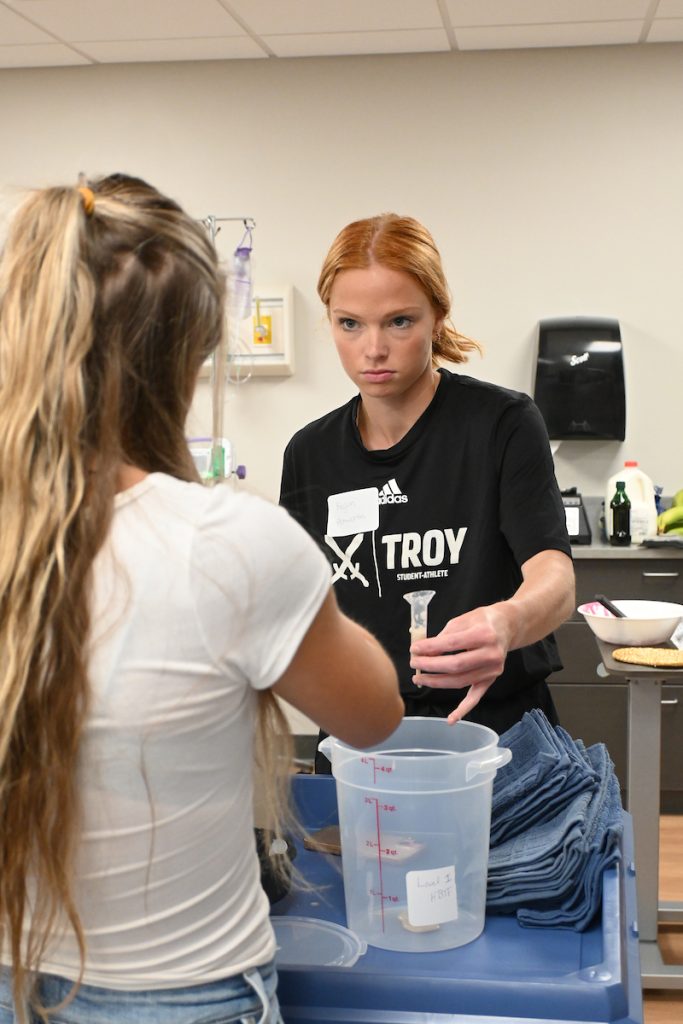
Students were deeply involved in all aspects of the study—blending meals, documenting viscosity levels, managing the feeding pumps, and performing syringe feedings. It was an immersive experience that offered rare exposure to clinical research for undergraduate students. For many, it also ignited a passion for pediatric nutrition and hands-on patient care.
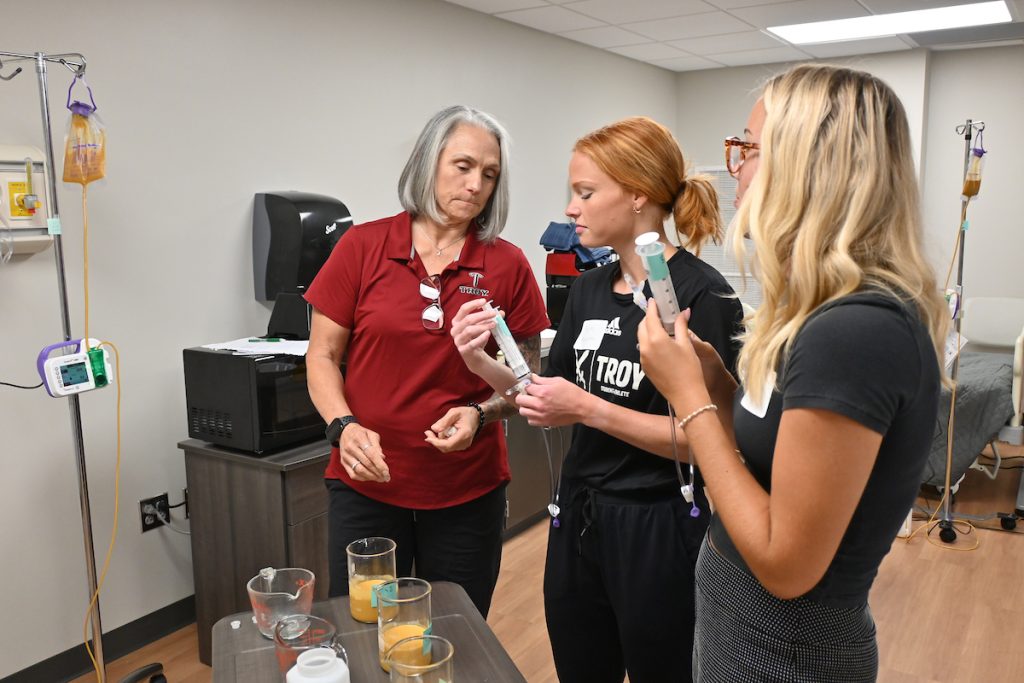
“One of the most rewarding parts was seeing the students take ownership of the project,” Dr. Spurlock noted. “They weren’t just helpers—they were contributors to meaningful, practice-changing research.”
Results from the study were surprising and encouraging. Across nearly all viscosity levels and food types, right-angle tubes performed comparably to their straight counterparts in terms of flow rate and clogging. In some cases, especially with medium-viscosity blends, the right-angle tube showed slightly better flow consistency when using a syringe.
Shannon Walker, who brings over a decade of experience working with children on long-term feeding programs, wasn’t surprised. “Parents often prefer right-angle tubes because they’re just more practical. What this study shows is that practicality doesn’t mean compromising safety or function,” she said. “This research is going to help a lot of clinicians feel more confident tailoring feeding plans to a family’s specific needs.”
Of course, the research team emphasizes that individualized care and professional guidance remain crucial. Not all children or blends are the same, and the equipment used should always align with clinical recommendations. But the study opens the door for more flexible and patient-centered decision-making in blended food therapy.
“This isn’t about rewriting the guidelines overnight,” Dr. Johnson explained. “It’s about creating space for conversations between dietitians, physicians, caregivers, and patients. It’s about asking, ‘What works best for this child?’”