Part 1 of this series, covering 1855 through World War II, is available at https://today.troy.edu/news/it-came-from-the-archives-the-inventiveness-of-wiregrass-residents-is-recorded-in-the-u-s-patent-office/
From the end of World War II through 2024, an imperfect search of the U.S. Patent and Trademark Office’s online database identified 337 patents awarded to inventors from Alabama’s Wiregrass region.
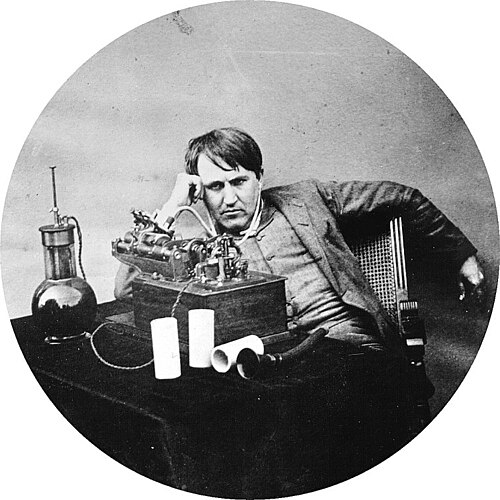
Most patents issued before World War II reflected the classic image of the American inventor — an individual tinkerer who built a better mousetrap, or invented an entirely new one, and hoped to profit from the idea.
Individual inventors continue to dominate Wiregrass patents, but after 1945 three significant trends emerged.
First, the pace of innovation accelerated dramatically, rising from an average of 0.8 patents per year between 1945 and 1964 to 1.55 annually from 1965 to 1984 and 6.88 per year from 1985 through 2025.
Second, corporations increasingly sponsored research and development that resulted in patented inventions. This trend is reflected in the organizations to which inventors assigned their patents.
Third, patented inventions evolved alongside the region’s economy as it shifted from agriculture, natural resources and transportation to manufacturing, services and consumer products.
One example is Ansell Corp., which operated a manufacturing facility in Dothan. The company sponsored 18 patents involving latex products, including surgical gloves and condoms, as well as packaging systems and industrial machinery. Between 1970 and 1994, individuals or two-person teams earned 10 patents. From 2012 to 2019, international research teams that included at least one Dothan-based inventor produced eight additional patents.
Another example is Hedstrom Corp., which manufactured metal-tube household furniture, child care products and playground equipment between 1950 and 1985. During that period, the company secured 11 patents. Raymond Boucher, a Massachusetts engineer who relocated with the company to Dothan in 1950, was the sole inventor or a member of the team responsible for 10 of those patents.
Sony Corp. operated a manufacturing plant in Dothan from 1977 to 2012 and benefited from employee innovations involving magnetic tape chemistry, tape cartridge mechanics and floppy disk technology. Nine of the 11 patents assigned to Sony between 1986 and 2006 came from individual technicians. Edward Gordon received three patents, while Gregory Ray Clemmons earned four.
Business-to-business manufacturing also generated innovation. Dunbarton Corp., a manufacturer of interior and exterior door systems, received eight patents between 1989 and 2021 covering door frames, gussets and related assemblies. William J. Rentschler received the company’s first four patents between 1989 and 1995, Robert J. Theune earned one in 1997, and teams of inventors produced the patents issued in 2003 and 2021.
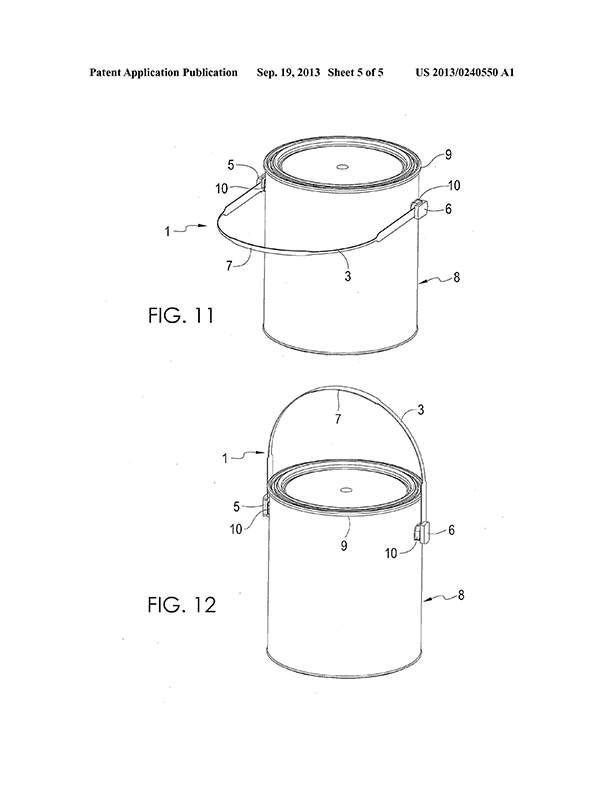
KW Plastics, founded in Troy in 1981, expanded from plastics recycling into manufacturing paint containers through KW Containers in 1998. Beginning in 2005, company engineers patented innovations involving reinforced containers, bucket handles and lids. By 2017, the KW companies had received eight patents.
Kimber Manufacturing relocated its firearms headquarters and production facility from Yonkers, New York, to Troy in 2002. Between 2021 and 2026, Kimber received 11 patents covering improvements to rifles and pistols. John Simon was the sole inventor on three patents, while Michael Withey received six.
Medical and dental inventions also flourished after World War II. Only two patents in those fields had been awarded to Wiregrass residents before the war. In 1963, William Russell patented a spinal massage table, and a decade later Furnie Johnston developed two surgically implanted metal supports for bone fractures.
Beginning in 1992, Wiregrass inventors earned 28 additional medical patents. William Kans received a patent for a device that implants irradiated pellets into the gastrointestinal tract. Between 2021 and 2025, Dr. Gregg Soifer received seven patents covering telemedicine stethoscope adapters, orthotic devices, an oxygen therapy monitoring system and a voice-controlled weight machine adjustment system.
Medical software and diagnostic systems also became patentable during the 2000s. Michael Soppet patented a diagnostic and treatment planning calculator in 2006. Nelson Handal developed a computer-aided intake and assessment system in 2009 and an automated medical assessment calculator in 2020. On July 6, 2017, Ram Peddada received patents for a system that evaluates central vision and another that helps patients identify an eye care provider based on symptoms.
Individual inventors also continued developing practical consumer products.
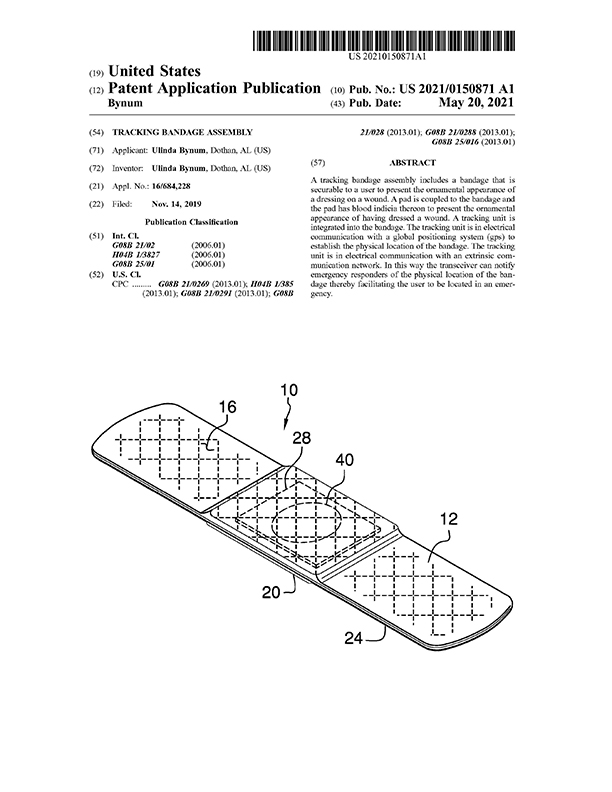
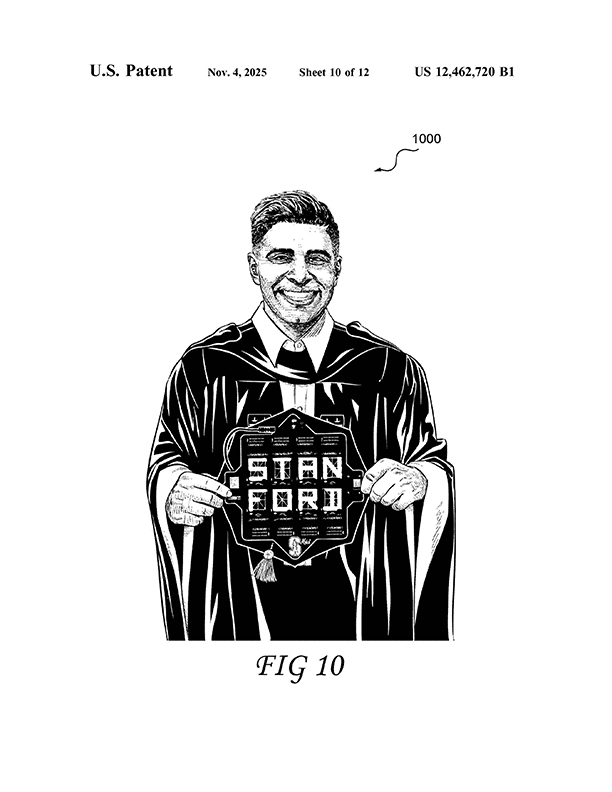
James Mullis of Troy received five patents between 2002 and 2004, including three for removable hunting safety armbands. Herbert and Henry Glass patented handheld disc launchers in 1988 and 1991. Louise Dennis developed a bracket that secures rugs to stairs in 1989, while Joanne Woodson patented an improved doll that same year. Sarah Ellis created a strap that keeps a child’s drinking cup from being thrown in 2009. Nancy Whitt and James Crawley improved a toddler stadium chair in 2017. Ulinda Bynum patented a personal tracking device disguised as an adhesive bandage in 2021, and Mahdi Al-Husseini received a 2025 patent for a wireless display designed specifically for graduation caps.
Some inventors successfully transformed their ideas into businesses. Oral surgeon Craig Schmidtke and John Graham developed the ORCA oral pain relief gel for professional and consumer use in Dothan. Entrepreneur Britany McKenzie patented a specialized garment washing bag marketed online as the Boobbag.
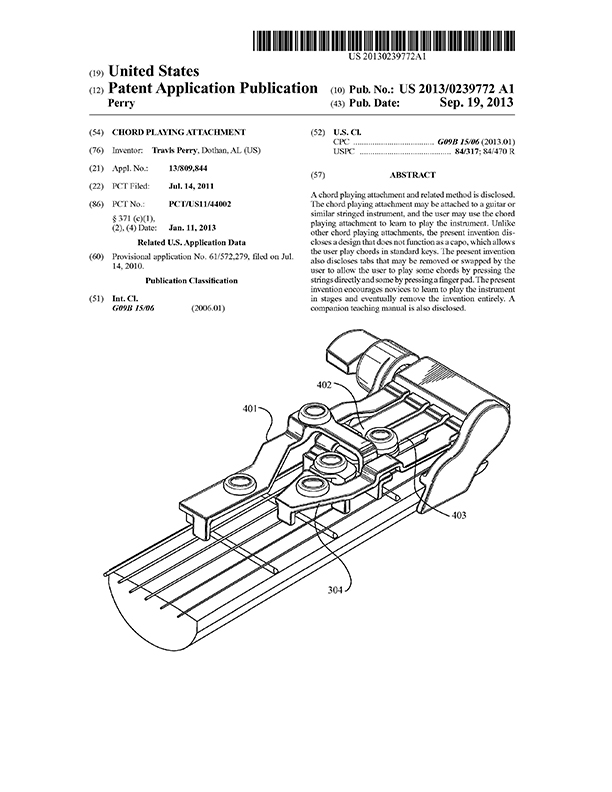
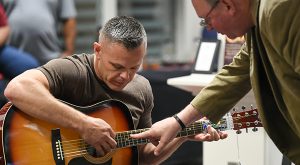
Among the region’s most recognizable inventors is Dothan’s Travis Perry, who patented the ChordBuddy guitar-learning system in 2013. Perry designed the device to help beginning guitar players master simple chords before becoming discouraged. After a successful appearance on Shark Tank, ChordBuddy continues to be manufactured and marketed from its Wiregrass headquarters. Perry has said he built 17 prototypes, each costing about $1,500, before filing his first patent application.
A long-standing story claims that either a patent clerk in 1833 or U.S. Patent Office Commissioner Charles Duell declared that “everything that can be invented has been invented.” Historians have thoroughly debunked the quotation, and the continued ingenuity of Wiregrass inventors demonstrates why.
The Wiregrass Archives relies on partnerships with outside organizations to help document the region’s history. The U.S. Patent and Trademark Office’s patent search database is available to anyone interested in researching inventions or pursuing a patent of their own. Learn more at https://www.uspto.gov/patents/search/patent-public-search.